
Manuscript Summary - ANG2 Blockade Diminishes Proangiogenic Cerebrovascular Defects Associated With Models of Hereditary Hemorrhagic Telangiectasia
ANG2 Blockade Diminishes Proangiogenic Cerebrovascular Defects Associated With Models of Hereditary Hemorrhagic Telangiectasia
Published on June 8, 2023
A new study from the lab of Dr. Stryder Meadows at Tulane University – Summarized by Adella Guidroz and Shreya Bavishi
The General Question: Is elevated angiopoietin 2 (ANG2) in the endothelium a conserved feature in mouse models of HHT that can be neutralized to treat brain arteriovenous malformations?
The Problem: There are currently no effective drug therapies to combat arteriovenous malformations in HHT, and the exact molecular mechanisms underlying AVM development are not understood.
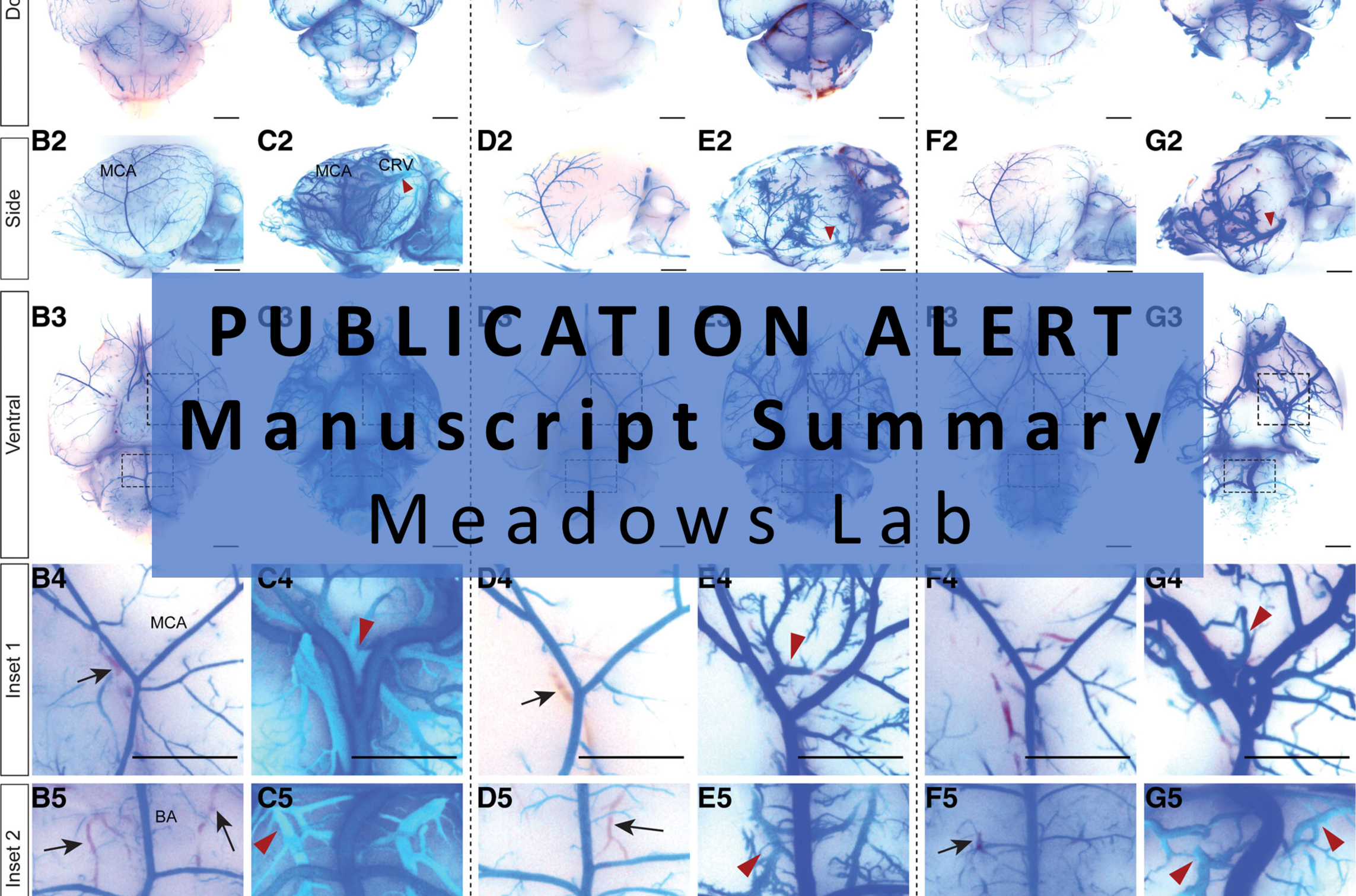
The Study: The cerebrovasculature of mouse models representing the three major forms of HHT– Smad4-iECKO, Eng-iECKO, and Alk1-iECKO – was characterized using vascular blue latex dye casting and transcriptomic analyses. The mouse studies were complemented with further in vitro studies to pinpoint the molecular pathway associated with upregulated ANG2.
The Conclusion: Overall, the data demonstrates ANG2 as a promising therapeutic target, which, when blocked, shows significant improvement in HHT-associated abnormal vascular defects.
The Impact: This study has increased our knowledge of the conserved, molecular mechanisms underlying AVM formation and aids in the potential development of more targeted treatments for HHT.
More Details: HHT patients suffer from nosebleeds, telangiectasias, and arteriovenous malformations (AVMs) in deep organs. AVMs, especially when present in brain (10-20% of HHT patients), may result in life-threatening complications. Presently, there is insufficient data on the effects that various drugs used in patients may have on AVMs. Thus, there is an urgent need for understanding the signaling mechanisms underlying AVM development to better discover and test more HHT-therapeutic targets.
The Meadows research group has previously shown the potential role of ANG2 in AVM development. In this article, the team further elucidates the role of ANG2 signaling in AVM formation, supported by bulk RNA sequencing. The researchers use mouse models of HHT type 1 (Eng-iECKO), type 2 (Alk1-iECKO) and JP-HHT (Smad4-iECKO), which together constitute ~95% of HHT patients. They further characterize the surface brain vasculature and abnormalities that develop in HHT using blue latex dye casting.
Elevated ANG2 in brain endothelial cells is a shared trait among the three major types of HHT. The upregulation of ANG2 is observed with concurrent downregulation of its receptor, TIE2/TEK, in HHT mutant mice when compared to controls. Further in vitro experiments revealed hampered TIE2/TEK signaling in an HHT setting. HHT mice exhibited cerebral defects, including increased vessel diameter and malformations. With pharmacological blockade of ANG2, these defects were prevented, to varying degrees, in all three models. In addition, comparative RNA sequencing revealed a subset of genes involved in angiogenesis and cell migration that were impacted by HHT and subsequent ANG2 inhibition.
In summary, the research article compared and expanded the murine molecular data in the three most prevalent types of HHT. They have further revealed the integral role of ectopic ANG2 signaling leading to AVM formation in HHT. Lastly, the data supports the use of anti-ANG2 molecules as a potential therapeutic avenue in HHT.
A note from Cure HHT
-Thank you Adella and Shreya for your news submission! If anyone would like to share a summary of a recent publication, news of a grant, or anything else newsworthy - we look forward to hearing from you! Submit News through the Hub.